
‘Football’s about winning – always has been, always will be.’
There was a chorus of approval in the third-class carriage, muted yet enthusiastic. I watched Natty James, sitting across me behind a recently-closed library copy of the Decameron. Reflex opinion represented, to him, more than an invitation to question. In such an atmosphere, contradiction became an imperative.
‘That, my dear Bert, sounds like perfect common sense until one gives it a second’s thought.’
‘Here we go,’ said Bert disparagingly.
‘Welcome aboard, Mr Tatsfied,’ said ‘The Professor’, ‘But I advise you to brace yourself. I don’t exactly know where we’re headed.’
I passed Natty a Senior Service, and struck a match. It felt like lighting a touchpaper.
‘I would like to begin by noting an irony: faced for the first time with a competition in which we are not compelled to await a draw to discover our next opponents, we have spoken of nothing but draws since we left Manchester.’ This raised a few chuckles, but the louder sound of consent to Bert Tatsfield’s thesis still seemed to echo in the carriage. ‘With regards to the question at hand, I think the new format gives us a welcome opportunity to assess the true nature of a tied game. Only then, I would suggest, could we accurately assign a value which could be estimated numerically.’
The conversation had been evolving in form over recent weeks. We were about to play our eighth match in the Football League, but nobody could be sure how we were doing. When the competition was devised, the board had stipulated that positions would be decided based on wins, draws and losses, but had not troubled itself to establish exactly how this was to be done. With every match played, the question appeared more pressing.
Our opponents that day had won six of their seven matches (including a Dudley Road massacre on the second week which had led a sizeable number of the crowd calling for George Worrall’s sacking, or worse) and lost none: it would be difficult to envisage a mathematical system in which they were not leading the contest. But beyond that, things got quite murky. With Stafford Road playing no part in the new competition, and the heinous theft of Trevor Dudley’s song thrush still strong in the mind, most fans were taking a keen interest in West Bromwich Albion’s progress compared to that of the Wolves. The Baggies had won three more games than us, which seemed cut-and-dried until you noticed that Wolves had lost one game fewer. Many supporters, particularly in the Coseley, Sedgeley and Moxley areas, effectively had two tables in their heads: one showing Wolves ahead with fewer defeats, and another showing Albion ahead with more wins. Such was the general confusion that a popular song of the day had been altered by pianists in some local pubs with the refrain, ‘If you want to know who’s winning, ask a policeman.’
‘It’s clear,’ continued the professor, ‘That for any given team on any given matchday, a win is the preferable outcome, and a defeat the least desired…’
‘Three cheers for Sherlock…,’ began Bob Watson, trailing off, perhaps, when he realized the trap he’d laid for himself.
‘But, I would contest, the value of a draw is variable. I’d be delighted with a draw today, for example, whereas next week, if we can’t beat Derby County, as five other teams already have, I should be happy to escort Mr Worrall to the Bilston Road Workhouse at the final whistle myself.’
‘Perhaps,’ said Jack Dudley, ‘You should get more points if you draw with a team that is above you in the table?’ While many in the carriage (including myself) nodded approval at this suggestion, the expression on Natty’s face was one of pity.
‘What happens on the first game of the season?’ he said. The carriage fell silent.
Bob Watson broke the silence. ‘Generally speaking a draw away from home is more satisfactory than one at Dudley Road.’
Natty looked more impressed. ‘That could work,’ he said, ‘Although I suppose you could argue that distance is a factor. Aston Villa would surely be more content with a draw in West Bromwich than one in Blackburn.’
‘Whoever scores more goals in a season wins. Simple!’ said Jack Dudley, who embodied the notion of a glutton for punishment.
‘There are a number of issues there. You could conceivably win the league without winning a match, for one thing. But the point is moot: though the board has been vague they have stated that wins, draws and losses should be the deciding factors.’
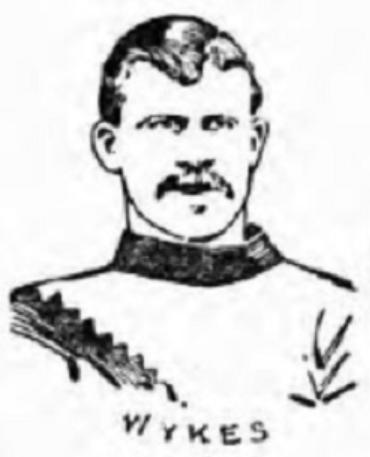
‘Brilliant,’ said the Professor, sympathetically, ‘Let’s favour draws over wins and watch Davey Wykes fire into his own net every week!’
Dicky Toolan spoke next. It was the first time he’d spoken all day. He’d been scribbling on some stolen correspondence stock from Manders, presumably a letter to his latest romantic disappointment, Doris Carlisle, who had not been accepting his visits to her boarding house in Chapel Ash for the last fortnight. I knew she’d been looking to leave her job at Coulthard’s, and the Manders stock was probably quite a clever way of getting her to at least open the letter before throwing it in the bin.
‘Not losing can be better than winning, he said, without letting go of the fountain pen he’d borrowed two bob from me to get back from the pawnbroker, ‘Sometimes, it’s the only thing you can think about.’
‘Brilliant,’ said the Professor, sympathetically, ‘Let’s favour draws over wins and watch Davey Wykes fire into his own net every week!’
Many laughed.
‘Still better than losing,’ mumbled Dicky, setting pen to paper once again.
Harold ‘Chimdy’ Potts, whose intellect was comparable to the Professor’s, though of a more scientific bent, had been taking in the proceedings from a window seat to the rear of the carriage. He now approached, took a senior service from me, and began to offer his own assessment, while holding onto my seat for stability.
‘They’re going to count wins, draws and losses, but they have not stipulated that they should be counted together. It seems to me that the most logical way would be to count wins and, if teams are tied, consider then who had the fewest defeats – or the most draws, which would amount to the same thing.’
The table, and most of the carriage, was quiet, awaiting Natty’s verdict. Bert Tatsfield produced from the floor a flagon of Butler’s Best, took a long quaff, belched and passed it to me.
‘Certainly a workable proposal,’ said Natty James eventually. He thought it through some more. ‘Definitely workable. It requires two numbers in the head, though.
‘So does a football score,’ replied Chimdy, to laughs from behind him, ‘I’m sure even the Jack Dudleys of this world can manage that – no offence Jack.’
Jack stood up quite suddenly, flushed. Even I, who knew him better than most to be a sweet-hearted gentleman, feared aggravation. He looked sternly at Chimdy, and then at Natty James. Jack began to stammer, ‘A d-draw isn’t as good as a w-win, and it isn’t as b-b-bad as a d-defeat,’ he said in a hurried, but not aggressive voice, ‘Sometimes it’s better than others, but taken as an average, it’s about half as good or bad as the alternative. Count the wins, deduct defeats from the wins. Nought for a draw.’
I patted him on the back. Murmurs of approval resounded through the carriage, and as the brakes took hold before our arrival at Preston, there was even applause. Chimdy was nodding vehemently, but Natty seemed taken aback at this unexpected bout of brilliance – or at least by its source. Eventually he found a quibble.
‘Teams will have negative scores. That might be complicated for some…’
It seemed a paultry point, and it clearly wasn’t hitting the mark.
‘…kids, for example.’
I was about to defend the ability of children to understand negative integers, but then thought about Jack’s nephew. Maybe he had a point….
‘So add one to everything I just said,’ said Jack, emboldened, ‘it’s not difficult, Professor.’
Natty looked humbled. Cheers erupted. It was Chimdy’s turn to pat Jack on the back.
‘Two points per game, shared in the event of a draw. It’s brilliant!’
Jack beamed with pride. As the doors opened and we streamed onto the platform, I had never felt as proud of my oldest friend.
‘And you could have a panel of judges to decide who played the most elegant football,’ he continued, ‘And award points for whichever team has less mud on their jerseys at the end. And points for teams that receive less cautions. A-and half-time cycle races between the goalkeepers for extra points, and…’
‘Two points per game,’ repeated Chimdy, patting him on the back again, ‘Shared in the event of a draw. It’s brilliant… in its simplicity.’